Saturday, January 12, 2013

Art Deco


"The term Art Deco, coined in the 1960s, refers to a style that spanned the boom of the roaring 1920s and the bust of the Depression-ridden 1930s. Art Deco represented many things for many people. It was the style of the flapper girl and the factory, the luxury ocean liner and the skyscraper, the fantasy world of Hollywood and the real world of the Harlem Renaissance. Art Deco affected all forms of design, from the fine and decorative arts to fashion, film, photography, transport and product design. It was modern and it was everywhere.
It drew on tradition and yet simultaneously celebrated the mechanised, modern world. Often deeply nationalistic, it quickly spread around the world, dominating the skylines of cities from New York to Shanghai. It embraced both handcraft and machine production, exclusive works of high art and new products in affordable materials.
Art Deco reflected the plurality of the contemporary world. Unlike its functionalist sibling, Modernism, it responded to the human need for pleasure and escape. In celebrating the ephemeral, Art Deco succeeded in creating a mass style of permanence. Infinitely adaptable, it gave free reign to the imagination and celebrated the fantasies, fears and desires of people all over the world.
Art Deco, like its forerunner Art Nouveau, was an eclectic style and drew on many sources. Designers sought to infuse jaded traditions with new life and to create a modern style based on a revitalised decorative language. To do so, they borrowed from historic European styles, as well as from the pictorial inventions of contemporary Avant Garde art, the rich colours and exotic themes of the Ballets Russes, and the urban imagery of the machine age. They also drew on more distant and ancient cultures. The arts of Africa and East Asia provided rich sources of forms and materials. Archaeological discoveries fuelled a romantic fascination with early Egypt and Meso-America." (http://www.vam.ac.uk/content/articles/a/art-deco/)
Art Deco stain glass

Jazz Jar and cover by Enouch Boulton
Vogue Red Blocks Saucer and cup by Eric Slater
Art Deco poster


Tuesday, January 1, 2013

Gothic Revival

The Gothic Revival was an architectural movement that eas emerged in England, in mid 18th centuries and it was actually a reaction to the Classical Revival. In the 19th century neo-Gothic styles strated to appear, and medieval forms revived. The Some people saw the movement not only in structural terms, but  also in religious or spiritual terms, as well. The movement was paralled and supported by medievalism, that had its roots in antiquarium. This is why the Gothic Revival is very concerned with survivals. By the  way, the movement has affected and influenced the United Kingdom, Europe and North America.

By the mid 19th century the movement started to concern not only the architecture but visual communication design, too, because for example, Gothic ornaments and niches appeared in wallpapers and gothic blind arcading could decorate even ceramic pitchers. The Great Exhibition of 1851's catalogue was illustrated with gothic details, from lacemaking and heavy machinery to carpet designs.


Wall papers, which are from the movement of the Gothic Revival:


Royal Courts of Justice. Last major Gothic Revival building in London. 


Example of a Gothic Revival Architecture : The Royal Courts of Justice.

Friday, December 21, 2012

Kitsch

Kitsch is a term that refers to any art or design using cultural icons and which is a style of mass-production. The word "kitsch" is used to  refer to an art that is pretentious or in "bad" taste and also used to refer to trite (used until so common as to have lost novelty and interest)  or crass works. The term is usedfor the works that had a popular appeal. The concept of kitsch was brought into use as a response  to a large amount of art work the  in 19th century where the aesthetics were confused with exaggeration, sentimentality and melodrama.

Whether Kitsch tries to appear sentimental, glamorous, theathrical or creative, it is stays to be a gesture imitative of the superficial appearances of art. For some people it is relied on repeating convention and formula, that doesn't have any creativity, nor originality.


Today there are artists or designers that love kitsch and do works that look like kitsch, but don't name it that way or some who proud to make Kitsch works. Also some people use old kitchs works in their works, too.


Today's works:
For some people, Jeff Koons' works are very kitsch. So some people don't like his works, as well as some adore like me.


Triennale Museum- Betty la Nera


On July 2012 there was a fantastic exhibition in the Triennale Museum in Milan, Italy.


Rudy Van Der Velde

Crack Art Group

We are so used to see these kind of  kitsch works, which are made for Iphones. 

Ontani


The Victorian Era

The Victorian era appeared in Great Britain during the Industrial Revolution, also during the apex of the British Empire. Queen Victoria of England inpired this era, which is characterized by strong, moral and religious beliefs, opptimism and propriety. So the era was full of pression. To illustraste it, even sayin "leg" was inappropriate, so they used it as "limb". This is why the Victorian period is still a byword for sexual repression.

When it comes to the visual communication design, graphic designers reflected their beliefs. And their designs were ornated with elaborate borders and lettering, which were complex. Themes were usually romantic and they used children and pets a lot in their works. Chromolithography became popularized by Louis Prang, because he printed millions of cards, called scrap.

Women's fashion and clothing was reflecting the eras ideas, because they covered all of the body and with the use of corset and a lot of fabrics made the body shape look a bit exaggerated.


Photography

With the industrial revolution the technology has developed a lot, that had affected even the visual communication design. Photography is one of the most important inventions that had affected these subjects.
Photography is the art, science and practice of creating images by recording light or other electromagnetic radiation.Usually a lens is used to focus the light reflected or emitted from objects into a real image on the light-sensitive surface inside a camera during a time exposure.The process is done through mechanical, chemical or digital devices known as cameras. The result in a photographic emulsion is an invisiblelatent image, that is developed in to a visible image, later on.Of caurse, photography did not affected only visul communication design but also business, science, manufacturing, art, recreational purposes and mass communication.

The first photograph (Niepce)


The first photograph that we see a human being. (Dagurre)

Sunday, December 16, 2012

Breaking the Grid

The industrail Revolution has even affected the printing techniques, there fore the graphic design.
Printing techniques were changed from movable types to lithography, because the movable types started to restrict to make a design to an inflexible grid. Also the illustrations, maps, etc. were hand drawn and engraved, allowing for restricted, costly editions.

Thanks to the invention called lithography the mass production became much more easier and it enable the the type to be independent form the compositor.

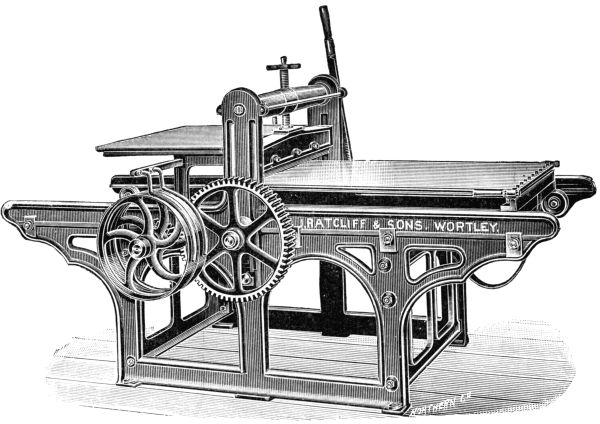
Actually Alois Senefelder is the one, who invented the lithography in the 18th century with stone plates, to reproduce music notes. Lithography refers to a printing process that uses chemical processes to create an image. The positive part of an image would be a hydrophobic chemical and the negative part would be water. Later on, the plate is introduced to the ink and water mixture. The ink will stick to the positive image and the negative part would be dissapear with the water. A flat print plat is needed during this process for much longer runs.

For each colour separate stones were used and a print went through the press separately for each stone. The aim was to keep the images aligned. With this technique characteristic poster designs of this period were made.

In a short time, the lithographic process was used to create multi-color printed images, like cropped, embedded, bordered, free running type (Chromolithography).


Industrial Revolution and its Effects

Industrial Revolution was a period from 1750 to 1850, that began in Great Britain. It enabled  major technological, socioeconomic and cultural changes to happen and then spread throughout rhe world. Even everything was influenced by the Industrial Revolution.

An economy based on manual labour was replaced with the industry and manufacture of machinery. It is known thht it began with the mechanisation of textile industries and the progress of iron-making techniques, and trade. More over, trading was expanded by the introdution of canals, improved roads and railways.
There was an increase in the population and average income. The capacity of production was supported thanks to the steam power and powered machinery.

The society was affected by this revolution, too : different classes started to emerge. Also, technological and economic progress gained strength with the improvement of steam-powered ships, railways, internal combustion engine and electrical power generation. (19th century).

Henry Ford (innovator): "There is but one rule for the industrialist, and that is: Make the highest quality goods possible at the lowest cost possible, paying the highest wages possible."


Wednesday, December 5, 2012

The Renaissance Book

For the humanists Greek and Latin was very important, because for them, they contained both all the lessons one needed to lead a moral and effective life and the best models for a strong Latin style. They developed a new classical scholarship, that was very strict. With this scholarship, they both corrected and tried to understand the works of antiquity (Greeks and Romans). The republican elites, patrons, who had the power in cities like Florencei Venice and Milan, Ferrara and Urbino hired humanists to teach their children classical morality and to write elegant, classical letters, histories and propaganda.

For example, Lorenzo Medici, who was the ruling elite of Florence after his grandfather and father, was very interested in Greek and Roman classicals. Actually the Greek literature, culture, philosphy, science, art which he tried to expand in his society.

Renaissance illuminated books, which were lighter, whiter and elegant:


Renaissance book bindings:


The Renaissance Book

New humanist writings demanded creating a new type of fonts, that were more legible, secular and elegant. Also these were done on papers apart from parchement and vellum. Besides the need for the condensed gothic typefaces was disappearing.

Page design were becoming lighter, whiter, so white space was making its appearance. With the "revival wave" the artisans started to  observe the past and create better typefaces for the society and spent a lot of time while working on lowercase letter, which did not exist in ancient Rome. Their basis was carolingian scripts, that were changed to match the Roman uppercase letters and to better adopt to Gutenberg's printing.


Aldus Manutius

(1450-1515) He was a humanistic scholar, who devoted himself to publishing the Greek and Roman classics. He usually produced books of small format for scholar at low cost. Moreover, he designed and cut the first complete font of the Greek alphabet and added ligatures or tied letters, which were like conventional signs used by scribes. To save space in Latin texts he had a type designed after the Italian cursive script; which was named as the script of Petrarch. It was the first italic type used in books. The books that were produced by him are called Aldine and bear his mark, which was a dolphin and an anchor. Much of his type was designed by Francesco Griffi (Francesco da Bologna)


Claude Garamond

(1480-1561) was a Parisian publisher and one of the leading type designers of that period. Three of his typefaces were requested for a royally orderes book series by Robert Estienne. Garamond took the handwiritings of  Angelo Vergecio, the King's librarian and his ten years-old pupil, Henri Estienne. Claude Garamond's Roman were created shortly thereafter, that influenced the whole France and beyond. (1540s)


Geoffroy Tory

One of the major printers, who wrote and printed theorethical treatise on the design of Roman capital letters. (1529). He was rewarde by François I, and became the Imprimeur du Roi.


It is important to know that the early type designers' aim was generally to find a relationship between the proportions of the letters and the shape and the dimension of the human body.


Tuesday, December 4, 2012

Leonardo Da Vinci

Leonardo Da Vinci was one of the most important names of the Renaissance. He was a painter, sculptor, architect, engineer, and scholar, born at Vinci, Florence in 1452 and died in 1519. His works included painting, architecture, the elements of mechanics, and human anatomy, which he recorded in notebooks with illustrations. These studied and sketches were collected into different codices and manuscripts. The illusrations, technical drawings and the unusual page layouts of Leonardo Da Vinci are beautiful...

Examples from his notebook,


Here is a video that you can watch some of his very important paintings

.

Saturday, November 24, 2012

The Art of Calligraphy


One of the major benefits of this new period of learning and investigation -that was based on humanism- was the spreading of literacy, that means the ability of not only to be able to read but also to write.

Keeping diaries and notebooks became a widespread practice, not only amongst artists and scientists but also amongst the rich upper classes and the elites, as did the sending back and forth of notes and
letters.

As a result, the art of calligraphy, page layout and lettering obtained special importance. Calligraphy masters travelled from mansions to palaces, and taught the new educated aristochrats these new fine crafts. The scholarly notebooks and texts, which were decorated with illustrations were the most remarkable ones of the genré.

Here are some examples of these notebooks and texts from late 15th and mid 16th centuries.


The first one is Italian scholar Pietro Bembo's letter, after whom the typeface "Bembo" was named by its creator Francesco Griffi.