Wednesday, December 5, 2012

The Renaissance Book

For the humanists Greek and Latin was very important, because for them, they contained both all the lessons one needed to lead a moral and effective life and the best models for a strong Latin style. They developed a new classical scholarship, that was very strict. With this scholarship, they both corrected and tried to understand the works of antiquity (Greeks and Romans). The republican elites, patrons, who had the power in cities like Florencei Venice and Milan, Ferrara and Urbino hired humanists to teach their children classical morality and to write elegant, classical letters, histories and propaganda.

For example, Lorenzo Medici, who was the ruling elite of Florence after his grandfather and father, was very interested in Greek and Roman classicals. Actually the Greek literature, culture, philosphy, science, art which he tried to expand in his society.

Renaissance illuminated books, which were lighter, whiter and elegant:


Renaissance book bindings:


The Renaissance Book

New humanist writings demanded creating a new type of fonts, that were more legible, secular and elegant. Also these were done on papers apart from parchement and vellum. Besides the need for the condensed gothic typefaces was disappearing.

Page design were becoming lighter, whiter, so white space was making its appearance. With the "revival wave" the artisans started to  observe the past and create better typefaces for the society and spent a lot of time while working on lowercase letter, which did not exist in ancient Rome. Their basis was carolingian scripts, that were changed to match the Roman uppercase letters and to better adopt to Gutenberg's printing.


Aldus Manutius

(1450-1515) He was a humanistic scholar, who devoted himself to publishing the Greek and Roman classics. He usually produced books of small format for scholar at low cost. Moreover, he designed and cut the first complete font of the Greek alphabet and added ligatures or tied letters, which were like conventional signs used by scribes. To save space in Latin texts he had a type designed after the Italian cursive script; which was named as the script of Petrarch. It was the first italic type used in books. The books that were produced by him are called Aldine and bear his mark, which was a dolphin and an anchor. Much of his type was designed by Francesco Griffi (Francesco da Bologna)


Claude Garamond

(1480-1561) was a Parisian publisher and one of the leading type designers of that period. Three of his typefaces were requested for a royally orderes book series by Robert Estienne. Garamond took the handwiritings of  Angelo Vergecio, the King's librarian and his ten years-old pupil, Henri Estienne. Claude Garamond's Roman were created shortly thereafter, that influenced the whole France and beyond. (1540s)


Geoffroy Tory

One of the major printers, who wrote and printed theorethical treatise on the design of Roman capital letters. (1529). He was rewarde by François I, and became the Imprimeur du Roi.


It is important to know that the early type designers' aim was generally to find a relationship between the proportions of the letters and the shape and the dimension of the human body.


Tuesday, December 4, 2012

Leonardo Da Vinci

Leonardo Da Vinci was one of the most important names of the Renaissance. He was a painter, sculptor, architect, engineer, and scholar, born at Vinci, Florence in 1452 and died in 1519. His works included painting, architecture, the elements of mechanics, and human anatomy, which he recorded in notebooks with illustrations. These studied and sketches were collected into different codices and manuscripts. The illusrations, technical drawings and the unusual page layouts of Leonardo Da Vinci are beautiful...

Examples from his notebook,


Here is a video that you can watch some of his very important paintings

.

Saturday, November 24, 2012

The Art of Calligraphy


One of the major benefits of this new period of learning and investigation -that was based on humanism- was the spreading of literacy, that means the ability of not only to be able to read but also to write.

Keeping diaries and notebooks became a widespread practice, not only amongst artists and scientists but also amongst the rich upper classes and the elites, as did the sending back and forth of notes and
letters.

As a result, the art of calligraphy, page layout and lettering obtained special importance. Calligraphy masters travelled from mansions to palaces, and taught the new educated aristochrats these new fine crafts. The scholarly notebooks and texts, which were decorated with illustrations were the most remarkable ones of the genré.

Here are some examples of these notebooks and texts from late 15th and mid 16th centuries.


The first one is Italian scholar Pietro Bembo's letter, after whom the typeface "Bembo" was named by its creator Francesco Griffi.


Science during the Renaissance Period

Beginning in the latter half of the 15th cent., a humanist faith in classical scholarship led to the search for
ancient texts, which would increase current scientific knowledge. Among the works rediscovered were Galen's physiological and anatomical studies and Ptolemy's Geography. Botany, zoology, magic, alchemy, and astrology were developed during the Renaissance thanks to the study of ancient texts. 

The Scientists and their Inventions

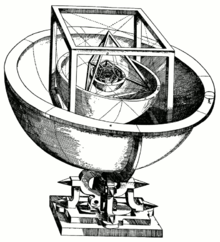
Scientific thinkers like Leonardo Da Vinci, Nicolaus, Copernicus, Galileo, Tcho Brahe and Johannes Kepler attempted to refine earlier thought on astronomy.

In 1543 Copernicus wrote De Revolutionibus, the work that placed the sun at the center of universe and the planets in semicorrect orbital order around it. His work was an attempt to revise the earlier writings of Ptolemy.

Galileo's most important and famous invention was an accurate telescope,  through which he observed heavens. He recorded his observetions in Siderius Nuncius.

Tcho Brahe gave an accurate estimate of planetary positions and refuted the Aristotelian theory that placed the planets within crystal spheres.

Kepler discovered that the planetary orbits were elliptical.


Galileo 


Kepler


Copernicus

Effects of Rennaissance

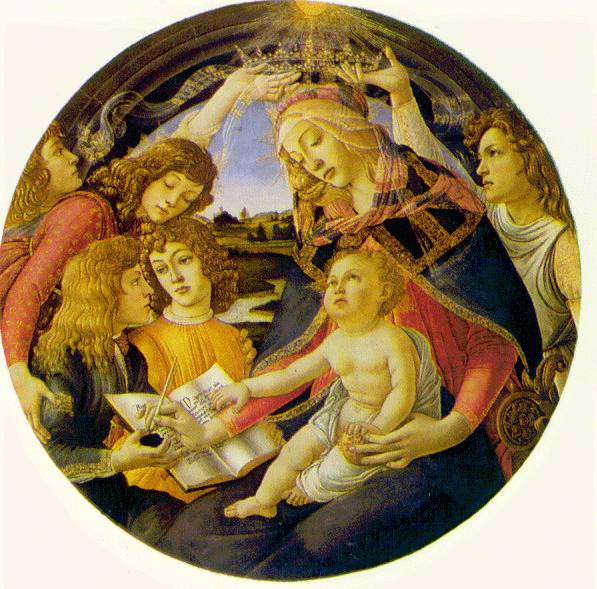
The Renaissance, was a cultural movement that expanded the period roughly from the 14th to 17th century. I has begun in Italy in the Late Middle Ages, and later on affected all the Europe. Movable type and paper have already been invented, so it was easier to spread the ideas from the later 15th century. During Rennaissance period, Latin and regular spoken languages (vernacular laanguages) have based on classical sources, because the actual aim was based on the ideas of Roman and Greek antiquity and humanism, which was very important. With these ideas and also with the help of patrons, artists, scientist, philosophers, writers, etc. were free to experiment, create incredible works, and make inventions, there fore, the linear-perspective, other techniques of rendering a more natural reality in painting (which was idealized), and educational reform have happened, and much more. There were really important "Rennaisssance Men" like Leonardo Da Vinci, Michelangelo, Brunelleschi, Massaccio, Boticelli...Also the economy of Italy have grew with the banks.

Here are some examples of Rennaissance art,

Leonardo Da Vinci

Andrea Mantegna


Andrea Boticelli


Thursday, November 8, 2012

The Printing Press

The technogy was getting more and more developed...

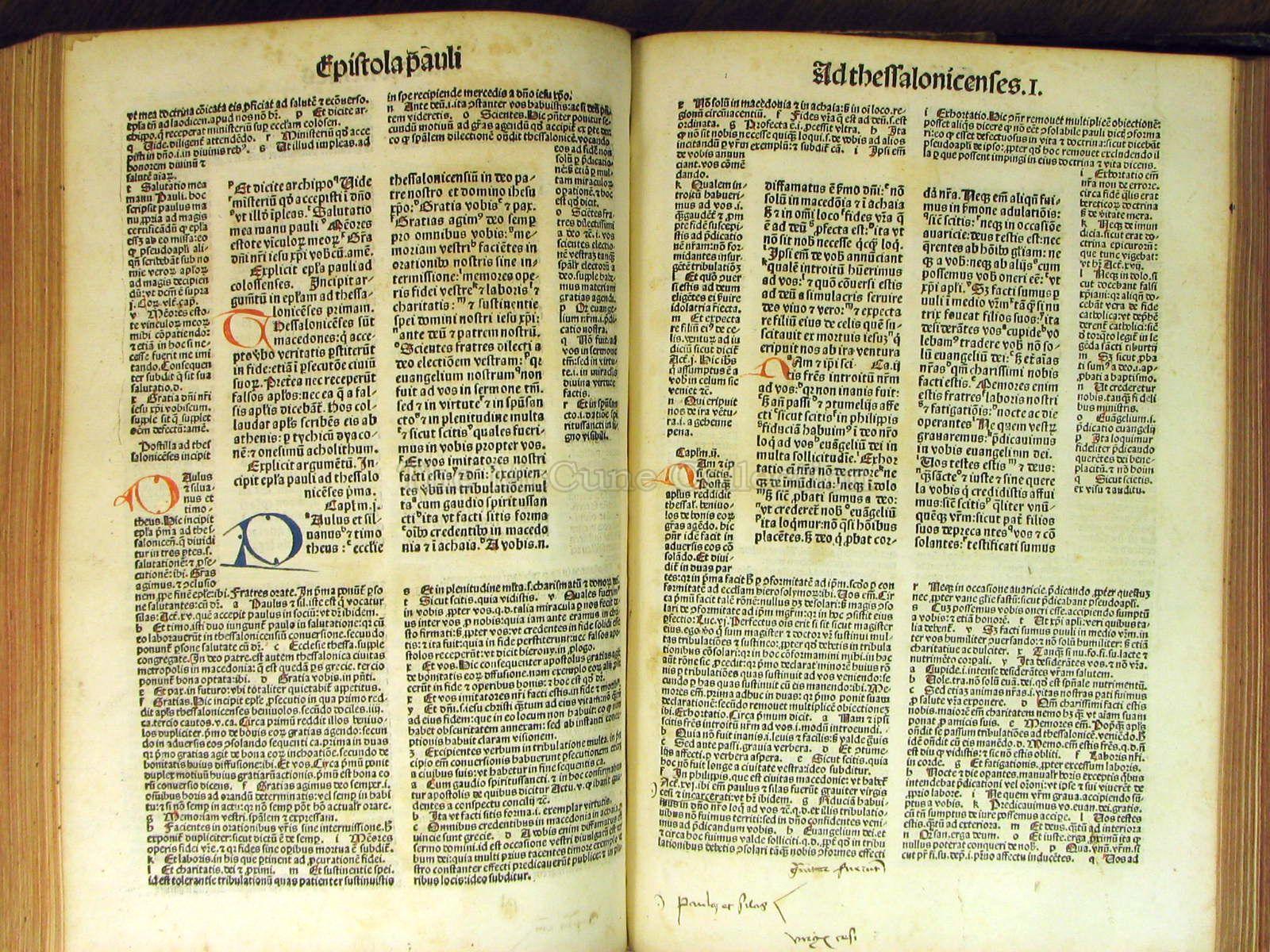
Incunabula


An incunabulum is a book, single sheet, or image that was printed -not handwritten- before the year 1501 in
Europe. These are usually very rare and fragile items whose nature can only be verified by experts. The origin of the word is the Latin incunabula for "swaddling clothes", used by extension for the infancy or early stages of something.

The first recorded use of incunabula as a printing term is in a pamphlet by Bernard von Mallinckrodt, "Of the rise and progress of the typographic art", published in Cologne in 1639, which includes the phrase prima typographicae incunabula, "the first infancy of printing". The term came to denote the printed books themselves from the late 17th century.

There are 2 types of incunabula, which are the xylographic and the typographic. The xylographic is made from one carved or sculpted block for each page and the typographic is made with movable type on a printing press in the style of German Johannes Gutenberg, whom I will explain later on. The incunabula does not reflect any important developments in the printig process (around 1500). It generally refers to the earliest printed books, completed at a time when some books were still being handwritten/hand-copied. There became a great diversity in the texts, that were chosen for printing anthe styles in which they appeared, thanks to the spread of printing.

During this period a myriad of typefaces were occured in local forms of writing or derived from the various European forms of Gothic script, or from documentary scripts, like most of Caxton's types. Tyes modelled on humanistic hands, especially in Italy, and these typefaces are still used today, hardly modified, in digitaal form.

author:Brunschiwig, Hieronymus


Wednesday, November 7, 2012

The Art of Book

Those days were dark in the Medieval Europe, so always reminded as the darkest period : the Third Century. The plague is the biggest reason for this darkness, but there were some other reasons, too, like fear, darkness, witch-hunts, illiteracy...The interesting thing is that, the magnifiscant illuminated manuscripts were occured during this dark period, in cold monasteries. The colophones of their books were the only testimonies of their really short, depressing lives.

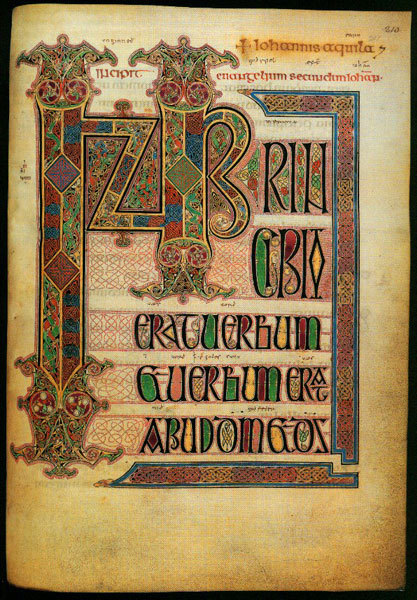
An illuminated manuscript is a manuscript in which the text is supplemented by the addition of decoration, like decoratedinitials, borders (marginalia) and miniature illustrations. In the most strict definition of the term, an illuminated manuscript only refers to manuscripts decorated with gold or silver, but in common usage and modern scholarship, the term is now used to refer to any decorated or illustrated manuscript from the Western traditions. (Comparable Far Eastern works are always described as painted, as are Mesoamerican works, Islamic manuscripts are usually referred to as illuminated but can also be classified as painted.)

The earliest surviving substantive illuminated manuscripts are from the period AD 400 to 600, initially produced in Italy and the Eastern Roman Empire The significance of these works lies not only in their inherent art historical value, but in the maintenance of a link of literacy offered by non-illuminated texts as well. Had it not been for the monastic scribes of Late Antiquity, most literature of Greece and Rome would have destroyed in Europe; as it was the pattern of textual survivals were shaped by their usefullness to the severely constricted literate group of Christians. Illumination manuscripts, that were used to increase the power of ancient document, helped their preservation and informative value in an era when new ruling classes were no longer literate.

The majority of surviving manuscripts are from the dark Middle Ages as I wrote before, but actually a myriad of the illuminated manuscripts survive from the Renaissance. The majority of these manuscripts are of a religious nature. Most illuminated manuscripts were created as codices, that has took the place of scrolls. A few manuscript fragments survive on papyrus, vellum or parchement. The most important manuscripts were written on qualified parchement, named vellum.

Apart from their historic value as documentaries, they were the only surviving examples of painting.


A video of a brief history of Illuminated Manuscripts


from "The Book of Kells"